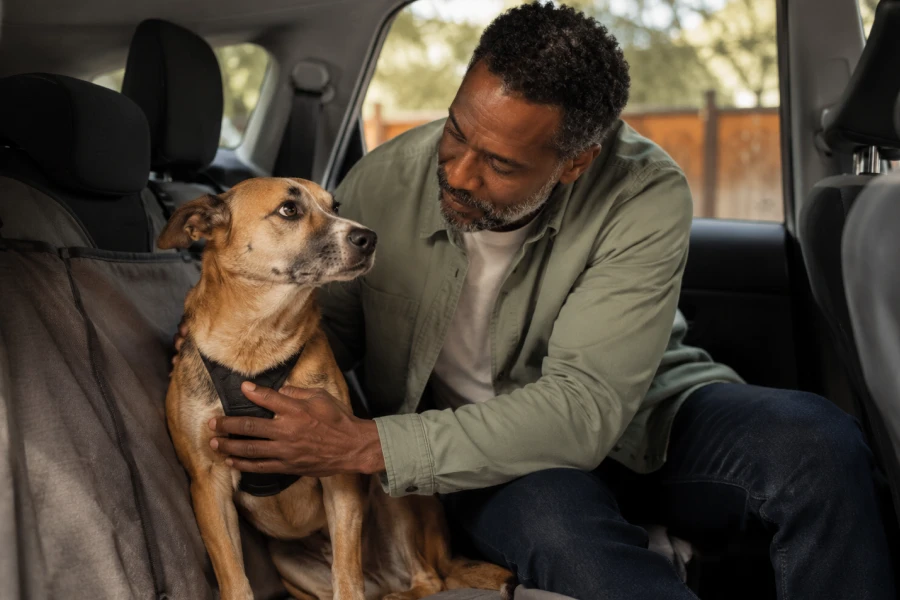
Some dogs worry about a car long before it moves. Dog car anxiety help begins by noticing that anticipation. The trembling, pacing, refusal, or drooling may start in the driveway. A thoughtful dog car sickness support plan can make preparation feel less overwhelming. First, lower the pressure around getting into the vehicle. Keep sessions brief enough that your dog can stay engaged. Avoid using force when hesitation appears. Calm choices build trust faster than urgent ones. A slower beginning often leads to more durable progress. The car can become safer when your dog understands every step.
Begin by deciding what your dog can handle comfortably today. That level may be standing near the vehicle or stepping inside. Meet your dog at that point without expecting instant progress. Reward calm observation, even when nothing else happens. A quiet moment beside the car is still useful practice. Build from the least stressful version of the experience. This protects confidence during the earliest sessions. Your dog learns that you will notice discomfort instead of ignoring it. That relationship makes later training feel more cooperative. Security grows when the dog has clear, manageable expectations.
Before leaving home, set up the vehicle with care. Choose appropriate restraints, ventilation, and a stable place to rest. Practical canine travel safety measures reduce unnecessary distractions during training. Bring water, wipes, treats, and anything your dog finds familiar. Remove loose items that could slide or clatter unexpectedly. Keep departures unhurried, even on busy days. Dogs often notice tension in the people around them. A composed routine tells your dog that nothing alarming is happening. Preparation creates more room for calm reactions. It also helps you focus on your dog instead of solving problems mid-drive.
Use the same small sequence every time you practice. Start with a cue, enter the car, settle, and pause. Repeat that rhythm until your dog recognizes the pattern. Familiar structure can create positive car associations without needing dramatic rewards. Keep praise specific and delivered at calm moments. Do not wait until anxiety becomes obvious. Instead, reinforce relaxed body language while it is happening. This helps your dog understand which choice feels safest. The pattern becomes more powerful with gentle consistency. Eventually, the routine itself can help settle your dog.
Choose easy routes before practicing on busy roads. A quiet neighborhood offers fewer sounds and sudden stops. Try driving at a low-traffic time when possible. Keep early rides short enough to avoid emotional overload. You can gradually add turns, speed changes, and longer stretches. If your dog seems unsettled, reduce the challenge next time. Stepping back is not failure; it is useful information. Stay observant instead of trying to push through discomfort. Each successful session should end with your dog feeling capable. That feeling is what makes another ride easier.
Keep simple notes after each practice ride. Record the route, duration, behavior, and what seemed helpful. This can reveal triggers that feel invisible in the moment. Some dogs struggle more with sharp turns or stop-and-go traffic. Others need more time before the engine starts. A rescue dog may also bring unknown travel experiences into the process. Thoughtful rescue dog travel practice leaves room for those individual differences. The notes help you make smaller, smarter adjustments. They also show progress when change feels slow. Clear observations make future decisions much easier.
Not every ride will be a dedicated practice session. Life includes errands, appointments, and unexpected changes. On those days, return to the parts of your routine your dog knows well. Keep the entry process calm and your voice steady. Avoid adding new training goals when time is limited. A familiar reward can help bridge a stressful moment. When possible, give your dog a short decompression break after arrival. This protects the positive work you have already built. Consistency during ordinary trips matters just as much as formal practice. The calmer the pattern feels, the easier travel becomes.

Leave a comment