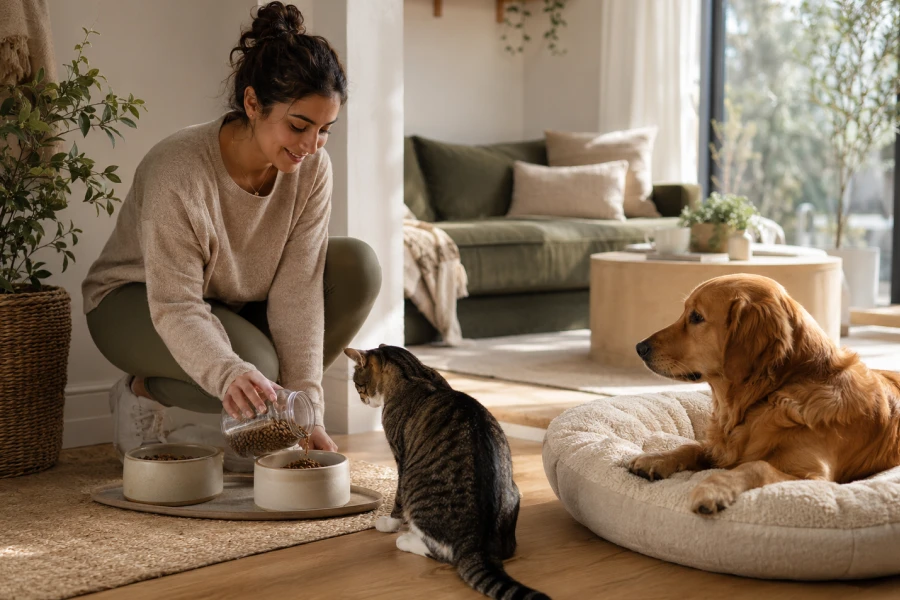
More pets can bring more warmth, personality, and movement into a home. A multi-pet household routine helps that energy feel easier to manage. Without structure, small tensions can grow around food, space, and attention. Clear shared pet routines help every animal understand what comes next. Start by noticing the busiest parts of your day. Feeding, arrivals, play, and bedtime often need the most support. Keep expectations simple enough for people to follow consistently. A good routine reduces confusion before it becomes conflict. Pets often relax when home life feels predictable. Small systems can make daily care feel much calmer.
Choose a few household rules that stay the same each day. Decide where pets eat, rest, wait, and play. Make the rules clear for every family member. Mixed signals can make even confident pets feel unsettled. Keep greetings calm when people arrive home. Avoid turning every door opening into a burst of excitement. Use the same cues and timing whenever possible. Consistent boundaries help pets understand what earns attention. That clarity lowers pressure between animals. Predictability is often more useful than constant correction.
Walk through your home from each pet’s perspective. Notice narrow pathways, busy corners, and places where animals get trapped. Create safe spaces for pets that offer rest without interruption. These spaces can be rooms, beds, crates, shelves, or gated areas. Make sure each pet can step away when needed. Avoid forcing animals to share resting spots. Give shy pets a quieter route through the household. Provide enrichment where pets can enjoy it without pressure. The home should offer choices, not constant competition. A thoughtful layout can prevent many small conflicts.
Keep regular care moments consistent whenever possible. Feed meals around similar times each day. Use a stable feeding zone setup so animals know where to go. Separate spaces may help pets eat without watching one another. Plan bathroom breaks, walks, and play with individual needs in mind. Some pets enjoy group activity, while others need private time. Do not assume equal treatment always means identical treatment. Fair care responds to each animal’s comfort level. Clear routines reduce the urgency around everyday resources. Pets often settle more easily when they can predict their turn.
Perfect schedules rarely survive real households. Build a rhythm that works on workdays, weekends, and busy evenings. Start with the minimum structure your home truly needs. Add complexity only when it solves a real problem. Use reminders for meals, medications, grooming, or individual play. Keep supplies in predictable places to avoid rushed decisions. Ask everyone to follow the same core steps. A realistic schedule is easier to maintain than an impressive one. Your pets benefit from repetition more than elaborate plans. Consistency becomes meaningful when it fits your actual life.
Space can teach pets how to make better choices. Separate access to food, beds, toys, and people when tension appears. Do not wait for an argument before adjusting the environment. Give each animal a way to rest without being followed. Use gates or furniture placement to create softer boundaries. Rotate high-value items when supervision is limited. Notice which spaces lead to relaxed behavior. Then make those spaces easier to use. Physical setup often changes behavior more gently than correction. A calmer home begins with fewer unavoidable pressure points.
Trust grows when pets experience the same dependable care repeatedly. Keep communication open between everyone who shares responsibility. Use daily care coordination to make sure no pet gets overlooked. A quick note can track meals, medication, mood, or unusual behavior. Review what is working at the end of each week. Adjust one detail at a time when tension returns. Small refinements often matter more than dramatic resets. Your pets do not need a perfect household. They need a home that feels understandable and safe. A steady routine gives every animal room to settle.




Leave a comment