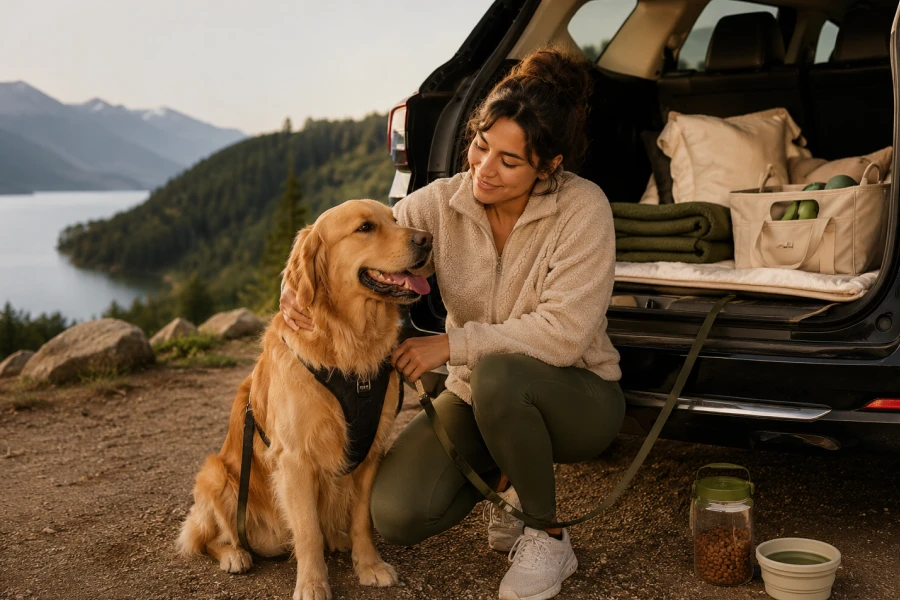
Long drives ask more from dogs than a quick neighborhood ride. Dog road trip preparation makes those larger days feel more predictable. The best plans begin before bags reach the car. Start with road trip dog essentials that support comfort, safety, and simple routines. Pack familiar bedding, water, cleanup supplies, and reliable restraints. Consider your dog’s usual schedule when choosing departure times. A calm start protects the first hour of travel. Short pre-trip practice rides can refresh useful habits. Preparation is not about overpacking every possibility. It is about making the journey easier to understand.
Load the car before inviting your dog inside. This avoids noisy reshuffling while your dog waits uncertainly. Keep your dog’s travel space clear and stable. Place comfort items where they will stay during movement. Do not introduce brand-new gear on departure morning. Familiar objects offer more reassurance than expensive surprises. Your dog should know where to sit, lie down, and rest. Review the entry cue you have practiced at home. Begin with the same calm pace used on shorter rides. A smoother departure creates a better emotional tone for the road ahead.
Many owners focus only on the final arrival time. Yet the first hour often shapes the rest of the drive. Keep that opening stretch easy and uneventful. Avoid loud stops or packed travel hubs immediately after leaving. Consistent long-distance dog travel depends on protecting those early calm moments. Start with a route your dog has handled before. Then add new scenery after the dog settles. Offer a quiet check-in during the first planned stop. Early steadiness gives your dog a better chance to relax.
Plan breaks around your dog’s needs rather than convenience alone. A stop should offer water, movement, and a chance to reset. Keep your dog secure while entering and leaving the vehicle. Choose calmer areas where your dog can decompress without too much stimulation. Do not assume a tired dog automatically feels comfortable. Some dogs need a few quiet minutes before walking. Others respond best to a slow sniffing break. Watch for changes in posture, appetite, or attention. Those signals help you decide whether the next stretch should stay short. A flexible plan respects your dog’s changing needs.
Map several possible break points before you leave. This gives you options when traffic or weather changes plans. Use travel training prompts to keep short breaks purposeful and familiar. Ask for a simple cue before the leash goes on. Reward calm waiting before your dog exits. Keep meals and treats consistent with what your dog handles well. Avoid creating a big event around every stop. The goal is regular relief, not constant excitement. A predictable break pattern can make the whole route easier. Your dog learns that rest and movement will return again soon.
There is no prize for covering more miles than your dog can manage. Adjust the day when your dog seems tired or overstimulated. A slower route may save more stress than it costs. Check your dog’s water intake and willingness to rest. Keep the temperature comfortable throughout the vehicle. Limit sudden noise when possible, especially near rest periods. A calm playlist or quiet cabin may help some dogs settle. However, silence is better when sound causes extra alertness. Follow your dog’s response instead of copying another family’s routine. Good travel plans leave room for real-life adjustments.
Road trips can strengthen everyday travel manners when handled thoughtfully. Practice waiting calmly while doors open and close. Reward relaxed settling instead of restless shifting. Support dog passenger manners by keeping expectations clear at every stop. Avoid rewarding frantic barking with immediate attention or release. Return to familiar cues when your dog seems unsure. Each peaceful mile reinforces the skills you have already taught. The destination becomes less important than the shared rhythm. With repetition, long travel can feel like a normal extension of home. That is when the journey becomes truly enjoyable.

Leave a comment