
Harmony does not mean every pet becomes best friends immediately. Harmonious multi-pet living means each animal can feel safe and understood. That starts with predictable care, available space, and kind boundaries. Clear shared pet routines make daily life easier to read. Pets benefit when meals, rest, and attention have an understandable rhythm. Start with the pressure points in your own household. Then make small adjustments that reduce competition and confusion. A calm home usually grows through repetition, not grand gestures. Every pet deserves room to settle in its own way. Gentle structure can change the whole atmosphere of a household.
Decide what calm behavior looks like in your home. It may mean waiting at doors, eating separately, or resting quietly nearby. Make those expectations realistic for each animal. Avoid rules that change depending on who is home. Consistency helps pets understand which choices feel safe. Use simple cues and repeat them in everyday moments. Reward calm behavior before excitement takes over. Keep corrections minimal and focus on better setups. Clarity is more useful than constant control. A household becomes easier when pets can predict the next step.
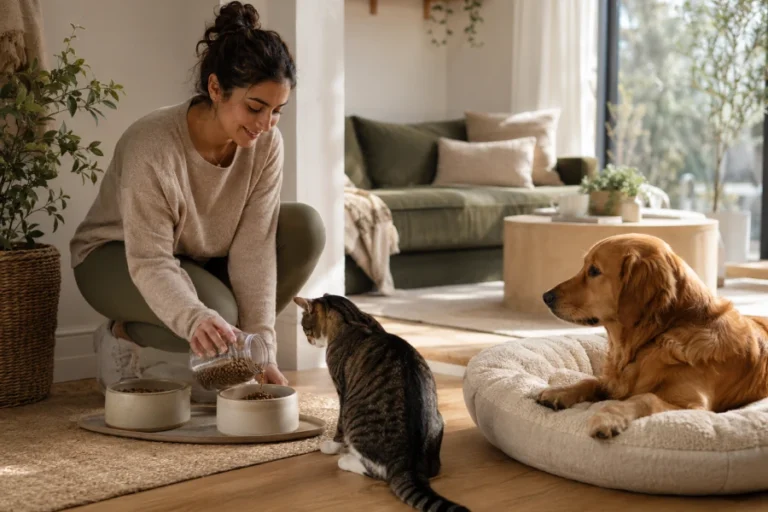
Daily rituals give multi-pet homes a dependable rhythm. Start with meals, morning care, walks, play, and bedtime. Use safe spaces for pets during the busiest transitions. Let each animal have a place where it can rest undisturbed. Keep feeding and high-value activities organized. Do not require pets to share close quarters when they seem uncomfortable. Allow quiet pets to choose distance without punishment. Make individual attention part of the routine too. Predictable rituals can reduce the competition that builds around people. A few repeatable moments can make the home feel much steadier.
Kindness and boundaries can work together. Give pets clear choices without expecting them to solve every problem alone. Separate them before tension rises around food or toys. Keep household rules the same across family members. Use calm redirection instead of loud reactions. Notice which activities make your pets feel settled. Repeat those activities more often. Reduce situations that regularly create stress. Consistency is not rigid when it responds to real needs. It is a way of showing pets that their environment is reliable.
Busy days often reveal whether routines are realistic. Prepare before visitors arrive, schedules shift, or travel begins. Use daily care coordination so each pet’s needs remain visible. Leave simple notes about meals, medication, walks, or changes in behavior. Set up separate areas before the household becomes hectic. Keep high-value items stored when supervision is difficult. Choose lower-pressure activities during times of extra noise. A calm plan can prevent stress from spreading between animals. Small preparation protects the work you do on ordinary days. Good routines should support the household when life gets complicated.
Pets change as they age, heal, settle in, or face new experiences. What worked six months ago may need adjustment now. Notice shifts in appetite, energy, social comfort, or rest. Keep watching pet body language cues as routines evolve. Reassess spaces when furniture, family schedules, or pets change. Add resources when one area becomes crowded. Do not wait for a recurring conflict to revisit the setup. Gentle updates often solve problems before they grow. A flexible household can stay calm through many changes. Regular review keeps your systems practical and kind.
Peaceful homes are built through ordinary choices repeated well. Keep learning what helps each pet feel secure. Focus on progress instead of expecting a perfect household. Celebrate quiet shared moments, even when they seem small. Ask for professional support when behavior or safety concerns grow. Use the information you gather to improve one detail at a time. Keep everyone involved in care on the same page. Your pets do not need identical needs to live well together. They need a home designed with attention and patience. That is how harmony becomes part of everyday life.



Leave a comment