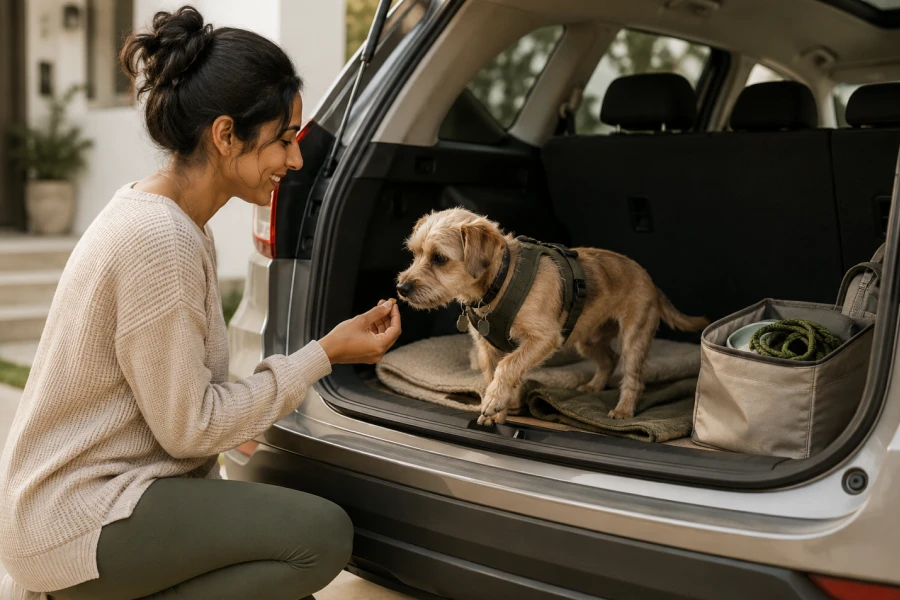
Car rides should expand a dog’s world, not shrink it through worry. Dog car ride training gives uncertain dogs a calmer starting point. Instead of chasing one perfect trip, begin with repeatable moments. A simple dog travel routine helps your dog predict what happens next. That predictability lowers pressure before the door ever closes. Start near the parked vehicle, where your dog can sniff freely. Bring familiar rewards, relaxed energy, and enough time to pause. Short sessions protect confidence better than forced progress. You are building comfort, not merely reaching a destination. With patience, the car can become part of ordinary life.
Begin with an open door and a settled environment. Let your dog choose how close to approach. Reward curiosity without pulling, rushing, or overexciting the moment. A few peaceful minutes can matter more than a long session. Keep your voice low and your movements easy to read. This is how calm car rides with dogs begin to feel realistic. Once your dog climbs in willingly, pause before expecting more. Offer a reward, then let the dog leave again. That freedom teaches your dog the vehicle is not a trap. Repetition makes the unfamiliar feel much less significant.
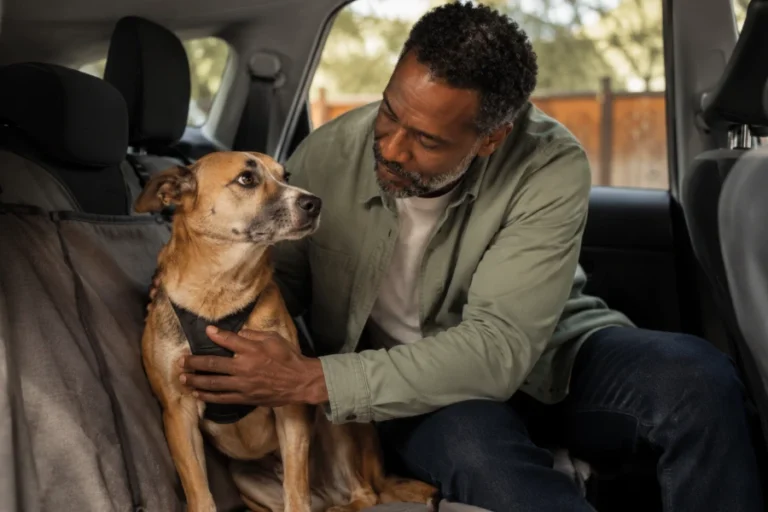
Stay parked until the car itself feels neutral. Give your dog time to settle on the seat or crate. A gradual puppy car acclimation process can help young dogs avoid early negative associations. Older dogs benefit from the same patient structure. First, close the door for only a few seconds. Then reopen it before tension has time to build. Add the engine later, once the quiet space feels familiar. Gentle car restraint training also belongs in these early sessions. Secure equipment should feel predictable rather than restrictive. Every calm repetition creates a stronger foundation for movement.
First drives should feel almost disappointingly short to a human. A slow loop around the block gives your dog useful information. Keep the destination simple and the return equally calm. Do not turn the first success into an ambitious errand. Instead, end while your dog still seems comfortable and responsive. Watch breathing, posture, movement, and willingness to accept rewards. Those details reveal whether the next session should stay the same. Some dogs need several quiet repeats before distance increases. Others progress faster when the rhythm remains predictable. The goal is steady confidence, not an impressive timeline.
Arrival matters as much as departure during early practice. Let your dog leave the car calmly instead of exploding into activity. A short pause after parking can prevent frantic transitions. Choose quiet places whenever possible during the learning stage. Avoid crowded lots, unfamiliar noise, and rushed handoffs at first. When your dog exits with composure, offer a simple reward. Then give time for sniffing and decompression before asking for more. This pattern shows that travel leads to manageable experiences. Your dog begins to connect the car with safety and clarity. That emotional connection supports better rides later.
The car can become a useful place for reinforcing simple manners. Practice a relaxed wait before jumping inside or stepping out. Ask for a familiar cue only when your dog seems settled. Keep expectations low enough that success remains likely. A favorite chew can give busy paws and mouths a better job. Soft bedding may help some dogs settle more easily. However, comfort should never replace proper restraint or supervision. Notice which details make your dog soften and which cause tension. Those observations help you tailor future sessions with intention. Small adjustments often produce the most meaningful change.
Eventually, the car should stop feeling like a special event. Use short practice rides for calm walks or quiet visits nearby. Include easy experiences between longer trips and unfamiliar destinations. This prevents travel from becoming linked only with stressful appointments. Keep the same entry routine whenever practical. Maintain familiar sounds, rewards, and safety steps as consistency grows. Your dog will learn what happens before movement starts. Over time, that knowledge can replace uncertainty with anticipation. A smoother ride becomes less about luck and more about preparation. The most successful practice looks ordinary because your dog feels secure.

Leave a comment